

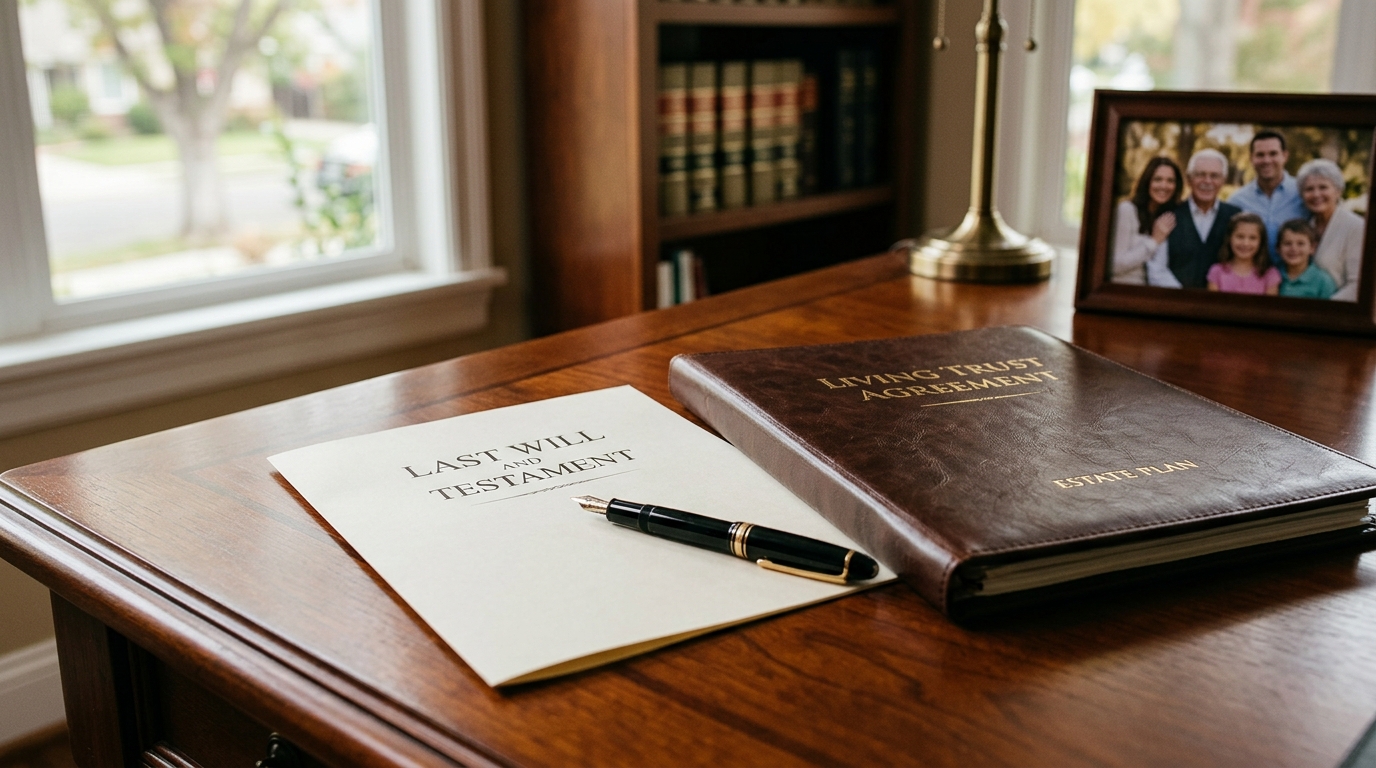
“Do we need a will, or should we have a trust?”
It’s one of the most common questions I hear from families in Sacramento, from parents in their seventies and from their grown kids who are starting to worry. Most people don’t want to become legal experts. They want to know what will make things easier for the people they love, and what happens to the house.
I’m a Certified Probate & Trust Specialist and a real estate and lending broker, and I see the other end of these decisions, when a family is settling an estate and selling a home. I’m not an attorney, so this is general information. The legal choices belong with an estate planning attorney, and the tax questions belong with a CPA. My goal is to help you walk into that meeting knowing what to ask.
What does a will do, and what doesn’t it do?
A will says who receives your property, names an executor to settle your estate, and lets parents nominate a guardian for minor children. It only takes effect at death.
What a will doesn’t do is keep your estate out of court. Property that passes under a will generally goes through probate, the court-supervised process for settling an estate. In California, probate commonly takes a year or more, the case is public record, and the attorney’s and executor’s fees are set by statute as a percentage of the estate’s gross value. A will also does nothing if you become unable to manage your own affairs while you’re alive.
For deaths on or after April 1, 2025, California offers simpler procedures for some smaller estates, including a petition for a primary residence worth up to $750,000. Your attorney can tell you whether that would apply. If there’s no will at all, my article on the Sacramento probate process without a will explains what happens.
What does a revocable living trust do?
A revocable living trust holds your property during your life and names a successor trustee to manage it and pass it to your beneficiaries after you die. When it’s properly funded, the property in it generally avoids probate.
You usually serve as your own trustee while you’re living, so day to day, nothing changes. You can amend or revoke the trust anytime. If you become unable to manage your finances, the successor trustee can step in and pay bills or sell the house without a court conservatorship. And because the trust document generally isn’t filed with a court, it stays more private than a will that goes through probate.
A revocable trust doesn’t lower income taxes, and it generally doesn’t shield assets from creditors or from long-term care costs. Those are separate planning questions for an elder law or estate planning attorney. My article on California trust components explains the roles of the trustee and beneficiaries.
What’s the difference between a will and a trust at a glance?
- Probate: A will usually means probate for property in your name alone. A funded trust usually avoids it.
- Privacy: A probated will becomes part of a public court file. A trust generally stays private.
- Incapacity: A will does nothing until death. A trust lets a successor trustee manage trust property if you can’t.
- Guardians: Only a will can nominate a guardian for minor children, which is one reason people with trusts also have a will.
- Up front effort: A will is generally simpler and less expensive to prepare. A trust costs more at the start and needs the extra step of funding.
How much do a will and a trust cost?
Costs vary by attorney and by how complex your family and property are, so I won’t quote numbers. In general, a trust-based plan costs more up front than a simple will, and probate costs more at the end. Many estate planning attorneys offer flat-fee packages, and it’s fair to ask what’s included, like the deed to fund the trust and future updates.
Why do people choose a will or a trust?
It depends on the family, and an estate planning attorney is the right person to weigh it. These are the situations that often come up:
- Simple estates. Someone with modest savings, no real estate, and accounts with named beneficiaries may be well served by a will.
- Young families. Parents need a will to nominate a guardian, and many also use a trust so a trustee can manage money for children until they’re older.
- California real estate. Homeowners often choose a trust, because a house in one person’s name is the asset most likely to push an estate into probate.
- Blended families. A trust can spell out how a surviving spouse is provided for and what eventually goes to each side’s children.
- Privacy. People who don’t want their estate in a public court file often lean toward a trust.
- Property in another state. Real estate in your own name in another state may need a separate probate there. Holding it in a trust can avoid that.
What is a pour-over will?
A pour-over will is a short will that goes with a trust. It says anything you still own in your own name at death should go into your trust. It’s a safety net, and it’s also where parents nominate guardians.
But property that passes through a pour-over will may still have to go through probate. So it doesn’t replace funding the trust.
What does funding a trust mean?
Funding means retitling your property into the name of the trust. For a house, that’s a new deed from you to yourself as trustee, recorded with the county. Bank and investment accounts are retitled or given a trust designation through each bank or brokerage.
In California, transferring your home into your own revocable trust generally doesn’t trigger a property tax reassessment. Federal law also generally keeps a lender from calling a home loan due for that kind of transfer. Still, have your attorney handle the deed and the required county forms, and tell your insurance company and lender. And if you refinance later, check that the house goes back into the trust afterward. Lenders sometimes ask owners to take the home out of the trust to close, and it’s easy to forget the second step.
What other documents should go with a will or trust?
Most complete plans also include a durable power of attorney for finances and an advance health care directive. The power of attorney names someone to handle finances outside the trust, like retirement accounts or tax matters. The advance health care directive names someone to make medical decisions if you can’t and records your wishes.
California has a statutory advance health care directive form, and the California Courts’ page on wills, estates, and advance care planning is a good place to start reading.
What are the most common estate planning mistakes?
The mistakes I see most often when a family is settling an estate are these:
- An unfunded trust. The trust was signed, but the house was never deeded into it, so the family may be headed to court anyway.
- Outdated beneficiaries. Retirement accounts and life insurance go to whoever is named on the beneficiary form, no matter what the will or trust says. Check them after marriages, divorces, and deaths.
- A plan nobody updated. Documents written decades ago may name a trustee who has died or leave out grandchildren.
- Nobody knows where anything is. Tell the successor trustee or executor where the originals are and who the attorney is.
- Adding a child to the deed instead of planning. It can seem easier, but it can expose the home to the child’s debts and create tax problems. Ask an attorney first.
How your home is titled matters as much as which document you sign. My article on how your home is titled in California explains each option.
Can you have both a will and a trust?
Yes, and most trust-based plans include both. The trust holds the main assets, and the pour-over will catches anything left outside it and nominates guardians.
How can I help your family?
I don’t draft wills or trusts. That’s your attorney’s work. Where I help is with the house: understanding what it’s worth, reading the deed with you, and later, if a trustee or executor needs to sell, handling the sale alongside the attorney. You can read more in my trust and probate home sales articles.
Every family is different, and the right plan depends on your home, your family, and your wishes. If you’d like to talk through the house side of it, reach out to me. There’s no pressure, and no wrong question.
About Maggie B. Hopkins
Maggie is the Broker Owner of Surroundings, a real estate and mortgage brokerage here in Sacramento, with more than 20 years in real estate and lending. She holds a Bachelor of Science in Health Care Administration from Western Illinois University, with internship experience in a long-term care facility. She is a Certified Aging-in-Place Specialist (CAPS) and a Seniors Real Estate Specialist (SRES), has completed the course training for RCFE (Residential Care Facility for the Elderly) certification, and is a Certified Probate & Trust Specialist. She specializes in reverse mortgage planning, helping homeowners understand how it may fit into their retirement goals. She also completed a week-long hospice volunteer training program. Because she handles both the real estate and the financing, families get one plan instead of two separate conversations. Every situation is different, so if you have questions about your own numbers, reach out to Maggie.