Sacramento · Placer · El Dorado · Yolo
Inherited a House in Sacramento? The Complete Guide
If you inherited a house in Sacramento, start by finding out how it was held: in a living trust, in your parent's own name, or with a co-owner. That decides who can sell it and whether a court is involved. Then secure the house, call the insurance carrier, find any mortgage or reverse mortgage, and talk with an attorney and a CPA before you decide to keep, rent or sell.
Written by Maggie B. Hopkins, Certified Probate & Trust Specialist, November 2026. CA DRE Broker Lic #01750680 · NMLS #349517.

A note from Maggie
“I don't know where to start.”
Most families who call me about an inherited house say the same thing first: "I don't know where to start." You may be the executor, the successor trustee, or the son or daughter who got the phone call. You may live three states away. You may have brothers and sisters who see it differently than you do.
This guide puts everything we've written about inherited homes in one place, in the order it usually happens. Each part gives you the short version and then links to the full article. Read the part you need today and come back for the rest.
Maggie
Most families start with these
- Selling an Inherited Home in Sacramento: Probate and Trust Sales, Step by StepRead it →
- Can You Sell a House During Probate in Sacramento County?Read it →
- How Do You Sell an Inherited House Held in a Trust in Rocklin?Read it →
- Dad Left His Sacramento House to All of Us. What Now?Read it →
- Should You Fix Up an Inherited House in Elk Grove Before You Sell?Read it →
- California Inherited Property Tax Laws ExplainedRead it →
Start here
Which path are you on?
How the house was titled decides who can sell it and whether a court is involved. Pull out the deed, or answer from what you know.
Step 1
What does the deed say?
Tap an answer and your likely path shows up here, with the articles that fit it. This is a starting point. Your attorney confirms it.
The whole guide, in the order it usually happens
- 1What should you do first after a parent or spouse passes?
- 2Is it probate, a trust or neither?
- 3How do you sell a house during probate in Sacramento County?
- 4How do you sell an inherited house held in a trust?
- 5What if the house has a reverse mortgage?
- 6How do brothers and sisters decide what to do with the house?
- 7Can you handle an inherited house from out of town?
- 8Should you fix up an inherited house or sell it in its current condition?
- 9What taxes come with an inherited house in California?
- 10How can parents make this easier for their kids?
- 11Where is probate filed, and how does it work in your city?
Part 1 · The first 30 days
What should you do first after a parent or spouse passes?
The first month is about protecting the house, not selling it. Secure it, insure it, keep the lights on and leave the belongings where they are until someone has the authority to act.
Change or rekey the locks and make a list of everyone who has a key. Call the insurance carrier, tell them the owner has passed and the home is empty, and ask in writing whether the policy still covers a vacant home. Keep the power, water and gas on. They protect the house, and an appraiser or buyer will need to see everything working.
Walk every room with your phone and take photos before anything moves. It protects you later if someone asks what was there. Then hold off on clearing it out. Wills, trust papers, deeds and loan statements are often sitting in a drawer, and giving things away before the estate has authority can cause trouble with the other heirs.
If a spouse has passed and the house was owned together, the path is often shorter. A surviving spouse can ask the court to confirm the house passes to them, and transfers to a surviving spouse are not reassessed for property tax.
Our Inherited Home Checklist puts these steps in order on one page.
Your first 30 days, tap as you go
Tap any card to start.
0 of 7
Your checks stay on this device, so you can come back to your list.
Read more on this
Part 2 · Probate, trust or neither
Is it probate, a trust or neither?
How the house was titled decides almost everything that follows. Look at the deed before you do anything else.
If the deed names someone "as trustee" of a trust, the successor trustee named in that trust usually handles the sale with no court case. If the deed is in your parent's own name and nothing else moves it, the estate usually goes through probate in the superior court of the county where they lived.
A few other forms skip both. Joint tenancy with a living co-owner and a recorded transfer on death deed can move a home outside probate and outside a trust. Some smaller estates qualify for a shorter court petition. For deaths on or after April 1, 2025, California's limit for the primary residence petition is $750,000. Your attorney decides whether the estate qualifies, because the counting rules have exceptions.
Your title officer and attorney can confirm which path you're on. Once you know, the rest of this guide sorts itself out.

Not sure which one you have? Use the path finder above.
Read more on this
Part 3 · Selling in probate
How do you sell a house during probate in Sacramento County?
Yes, you can sell a house in probate. The court first appoints a personal representative, and the authority the court grants decides whether a judge has to approve the sale.
No one can sign a listing or a purchase contract for the estate until the court issues Letters to the executor or administrator. We can still walk the house, give you a price range and plan the prep work while you wait for them.
With full authority, the personal representative can sell after giving every heir a Notice of Proposed Action at least 15 days ahead. If no one objects, there is no court hearing. With limited authority, a judge confirms the sale at a hearing, and other buyers can show up and bid more.
That court overbid follows a formula. The first overbid has to be at least 10 percent more on the first $10,000 of the accepted offer, plus 5 percent more on the rest. On a $500,000 accepted offer, the minimum first overbid is $525,500. Courts set their own calendars, so we never promise a closing date on a court sale. The hearing date is the real timeline.
An executor works with a probate attorney for the court side. Our job is the house: pricing, preparing, marketing and keeping every heir informed so the notice period goes quietly.
A probate sale, step by step
- 1Confirm who can sellThe court appoints the personal representative and issues Letters. No one signs before that.
- 2Plan with the attorneyFull authority or court confirmation, and which notices and deadlines apply.
- 3Price the houseWe walk it and give you a price range from recent sales nearby.
- 4Prepare the homeFamily takes what they want first. Then cleanout, repairs worth making, photos.
- 5List and market itWith buyers and agents who understand probate sales.
- 6Pick an offerCompared by net to the estate, terms and the strength of the buyer's loan.
- 7Notice or court stepFull authority: a 15-day Notice of Proposed Action. Limited: a court hearing with overbids.
- 8Close escrowOwnership transfers and the attorney reports the sale.
Full authority
- Heirs get a Notice of Proposed Action 15 days ahead
- No court hearing if no one objects
- No overbids, no 90 percent rule
Limited authority
- A judge confirms the sale at a hearing
- Other buyers can overbid in court
- Offer must be at least 90 percent of the appraisal
Try it
The court overbid calculator
- 10% of the first $10,000
- + $1,000
- 5% of the rest
- + $24,500
Smallest first overbid in court
$525,500
Only applies to a court-confirmed sale. After the first overbid, the judge sets how much each later bid has to go up.
Read more on this
- Can You Sell a House During Probate in Sacramento County?Read the article →
- How Long Does Probate Take in Sacramento County?Read the article →
- Do You Need a Probate Attorney to Sell a House in Carmichael?Read the article →
- Probate Timeline and CostRead the guide →
- Selling an Inherited Home: Probate and Trust Sales, Step by StepOpen →
Part 4 · Selling from a trust
How do you sell an inherited house held in a trust?
A trust sale has no court hearing and no overbid. The successor trustee signs, keeps good records and owes the beneficiaries a notice within 60 days of the death.
The successor trustee signs as the seller. Title and escrow usually ask for a certification of trust, a notarized statement that the trust exists and names the trustees, instead of the whole trust document. If there are co-trustees, read early whether one can sign alone or both must sign, because it affects every page in escrow.
Within 60 days of the death, the trustee has to notify each beneficiary and heir. That notice starts a window of at least 120 days for anyone to contest the trust. Ask your attorney whether to list or close before that window ends.
With no court calendar, a trust sale can follow a regular listing and escrow schedule. In practice, the cleanout and repairs usually set the pace, not the paperwork.

No court
A trust sale has no hearing and no overbid.
60 days
Trustee's notice to beneficiaries and heirs after the death.
120 days
The window to contest the trust after that notice.
Read more on this
Part 5 · When there's a reverse mortgage
What if the house has a reverse mortgage?
A reverse mortgage comes due when the last borrower passes. Heirs get a short window to decide, so find the servicer early.
After the heirs receive the servicer's due and payable notice, they have 30 days to say whether they will buy, sell or turn the home over to the lender. That timeline may be extended up to six months so the heirs can sell or arrange their own financing.
To keep the home, the heirs pay off the loan balance. If the balance is more than the home would sell for, the heirs can sell for at least 95 percent of the appraised figure. Send the servicer the death certificate, ask for every deadline in writing, and get a market price early. Six months goes fast when the estate hasn't opened yet.
As a mortgage broker as well as a real estate broker, I can explain the loan side and the sale side together. Call me at (916) 549-3131 about your loan options.
30 days
To tell the servicer your plan after the due and payable notice.
Up to 6 months
The timeline may be extended so heirs can sell or refinance.
95%
Heirs can sell for at least 95% of the appraised figure if the loan is larger than the home.
Read more on this
Part 6 · Brothers and sisters
How do brothers and sisters decide what to do with the house?
When a house goes to several children, each one has a say. The four paths are keep it, rent it, buy out a sibling, or sell, and each works for some families.
Keep it works best when one heir will live there. Someone still has to cover the loan, insurance, taxes and upkeep while the estate settles. Rent it means someone becomes the landlord, and a rental doesn't get the Prop 19 parent-child exclusion, so expect the property tax to go up.
A buyout lets one heir buy the others' shares. That usually takes a loan, a price everyone accepts and an attorney for the paperwork. If the buyer is also the executor, plan for a court step. Selling gives everyone their share in cash, and no one carries the house.
The fair price is what protects everyone. We price the house from real recent sales nearby, so the sibling who buys and the siblings who sell are working from the same number. When one sibling lives far away, we send the same updates to everyone at the same time.
The four choices
Keep it
Works best when one heir will live there. Someone covers the loan, insurance, taxes and upkeep meanwhile.
Rent it
Someone becomes the landlord. A rental does not get the Prop 19 parent-child exclusion.
Buy out a sibling
One heir buys the others' shares, usually with a loan and an attorney. Executor buying? Plan for a court step.
Sell
Everyone gets their share in cash, and no one carries the house.
Read more on this
Part 7 · From out of town
Can you handle an inherited house from out of town?
Yes. Many of the heirs we work with live in another state. The work is coordination, and it can be run from a phone.
The hard part of selling from a distance is the five vendors: the locksmith, the cleanout crew, the estate sale company, the handyman and the stager. We coordinate the cleanout and repair crews, send you photos and short updates, and keep every heir on the same page, so you aren't managing five vendors from a distance.
Belongings usually go out in this order: the items family wants to keep, an estate sale for things with resale interest, donations, then hauling for the rest. Our Sacramento giving map lists places that take furniture, clothing and household goods.

Where the belongings go, in order
- What family keeps
- Estate sale
- Donations
- Hauling the rest
Read more on this
Part 8 · Fix it or sell it now
Should you fix up an inherited house or sell it in its current condition?
Inherited homes often have original kitchens, older roofs and years of put-off repairs. The right path is the one that leaves the estate the most after costs and time.
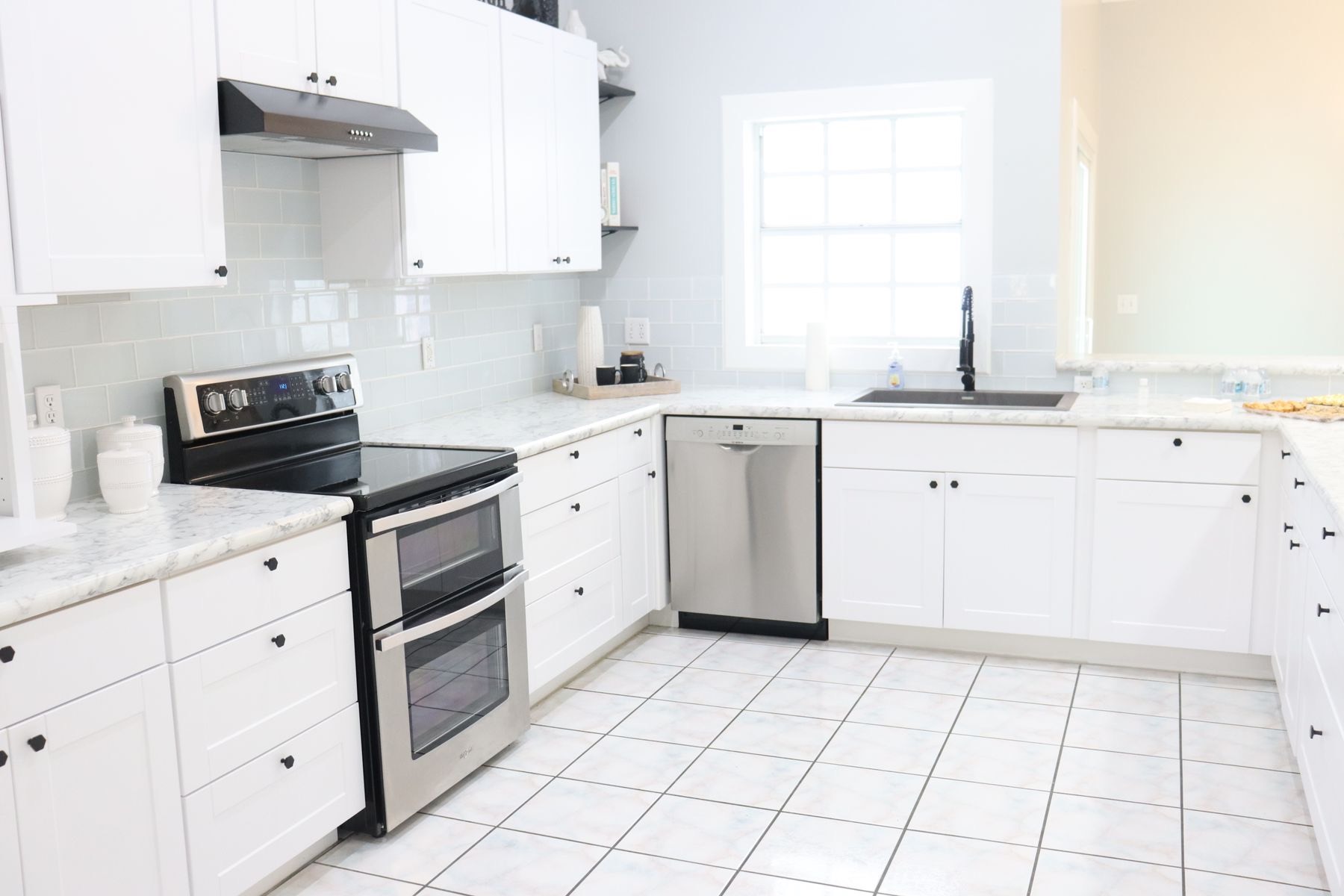
You have three real paths. Sell it in its current condition on the open market, priced for the work it needs. Make a few repairs that should return more than they cost, like paint, flooring, yard cleanup and safety fixes. Or compare cash offers, which can make sense with a reverse mortgage deadline or a home that won't qualify for a buyer's loan.
We show you the likely net for each path, side by side, before you choose. That way the decision is yours and it's based on numbers, not on whoever sent the most letters.
About those letters: probate filings are public, so some buyers mail offers to every estate. Before you answer one, get a real market price. Then compare every offer by what the estate actually nets, the proof of funds behind it and how likely it is to close.
Current condition, open market
Clean it, clear it and price it for the work it needs. Remodelers look for these homes.
A few repairs
Paint, flooring, yard cleanup and safety fixes, only the ones we expect to return more than they cost.
Compare cash offers
Side by side with an open-market estimate, by what the estate actually nets.
Read more on this
Part 9 · Taxes
What taxes come with an inherited house in California?
Three taxes matter most: the income tax basis, the property tax reassessment and the transfer tax when you sell. Your CPA should run your numbers before you decide anything.
The step-up in basis. The IRS generally measures an inherited home's basis from its fair market price on the date of death, not what your parent paid. Say a parent paid $90,000 decades ago and the home was worth $600,000 when they passed. If the estate sells for $610,000, the gain starts from $600,000, before the costs of sale. That's an example only, and your CPA confirms how it applies to you.
Property tax and Prop 19. A death is a change in ownership, and the home is reassessed to current market price unless an exclusion applies. Since February 16, 2021, the parent-child exclusion only works when the home was the parent's primary residence and becomes the child's primary residence. The claim form is BOE-19-P, due within three years of the death or before the home transfers to someone else, whichever comes first. If the plan is to sell, the exclusion usually doesn't help.
The change in ownership statement. The assessor has to be told about the death. For trusts and most transfers outside probate, the trustee or the person inheriting files within 150 days.
Transfer tax at the sale. Sacramento County charges $1.10 per $1,000 of the price, and the City of Sacramento charges its own separate transfer tax. Escrow confirms the figure in Placer, El Dorado and Yolo counties, and we show it on your estimated net sheet.
Example only: how the step-up in basis works
The gain is measured from $600,000, not $90,000. That's about $10,000 before the costs of sale.
An illustration, not tax advice. Your CPA runs your real numbers.
Read more on this
Part 10 · For parents planning ahead
How can parents make this easier for their kids?
Most of what makes an inherited house hard can be planned for ahead of time. A will, a trust and a short conversation with your kids go a long way.
A will names who gets what and who should handle it, but a home left by will alone usually still goes through probate. A living trust that actually holds the house lets a successor trustee sell it without a court case. The trust only helps if the deed was put into it, which is the step families miss most often.
Tell your kids where the papers are, who your attorney is and what you'd want done with the house. That conversation is the single kindest thing a parent can leave behind. An estate planning attorney drafts the documents, and we're glad to talk through what the house might sell for today so the plan rests on real numbers.

Read more on this
Part 11 · Your city and your court
Where is probate filed, and how does it work in your city?
Probate goes to the superior court in the county where the person lived, even if the house sits in another county. We sell inherited homes across Sacramento, Placer, El Dorado and Yolo counties.
In our area, that means the Superior Court of California for the County of Sacramento, Placer, El Dorado or Yolo. Each court posts its own local rules, which can affect details like the deposit an overbidder brings to a hearing. Your attorney files the case and tracks the court's calendar.
We help families with inherited homes across the region, from Land Park and East Sacramento to Carmichael, Fair Oaks, Elk Grove, Roseville, Rocklin, Lincoln, El Dorado Hills and Davis. Each city has its own page on probate and trust sales below.
 SacramentoProbate and trust sales in Sacramento →
 CarmichaelProbate and trust sales in Carmichael →
 Fair OaksProbate and trust sales in Fair Oaks →
 Elk GroveProbate and trust sales in Elk Grove →
 RosevilleProbate and trust sales in Roseville →
 RocklinProbate and trust sales in Rocklin →
 LincolnProbate and trust sales in Lincoln →
 El Dorado HillsProbate and trust sales in El Dorado Hills →
 DavisProbate and trust sales in Davis →
You don't have to do this alone
Your attorney handles the court. We handle the house.
The price, the cleanout, the repairs worth making, the sale and the updates to every heir. A short conversation before you sign anything can save the estate real money.
Questions families ask us
Frequently asked questions
+Can you sell a house while it's in probate in California?
Yes. Once the court issues Letters to the executor or administrator, the house can be listed and sold. With full authority, heirs get a 15-day Notice of Proposed Action and there's no hearing. With limited authority, a judge confirms the sale and other buyers can overbid.
+Does a house in a living trust go through probate?
Usually not, as long as the deed was actually put into the trust. The successor trustee sells it with no court case, after sending the beneficiaries a notice within 60 days of the death.
+Do you pay capital gains tax on an inherited house?
Often very little, because the basis generally steps up to the home's fair market price on the date of death. The gain is measured from that figure, not what your parent paid. Your CPA confirms the numbers for your case.
+Can one sibling buy out the others?
Yes. One heir buys the others' shares, usually with a loan, a price everyone accepts and an attorney for the paperwork. If the buying sibling is also the executor, plan for a court step.
+How long do heirs have when there's a reverse mortgage?
Thirty days after the servicer's due and payable notice to say what they'll do, and the timeline may be extended up to six months to sell or refinance. Ask the servicer for every deadline in writing.
+Should I accept a cash offer letter on my parent's house?
Get a real market price first. Then compare every offer by what the estate nets, the proof of funds behind it and how likely it is to close. Sometimes a cash offer is the right call, and you'll know because the numbers say so.
This guide is general information about inherited property in California. It is not legal or tax advice. Please talk with your attorney and CPA about your own situation.